Is an American businesswoman. Amoruso founded Nasty Gal, a wom's fashion retailer, which wt on to be named one of the fastest growing companies by Inc. Magazine in 2012.
She was an only child. She grew up in the suburbs and wanted out of her home because her parts didn't get along.

After being diagnosed with depression and atttion deficit hyperactivity disorder (ADHD) in her adolescce, she dropped out of school and began homeschooling to help cope with these issues. Her first job as a teager was at a Subway restaurant,
Watch: How Girlboss Sophia Amoruso Picked Herself Up After Her Business And Marriage Fell Apart
She left Portland and relocated to San Francisco, shortly after she discovered she had a hernia in her groin. To get the health insurance for surgery, she worked in the Academy of Art University lobby checking studt IDs.
Amoruso oped an online eBay store, which she called Nasty Gal Vintage, named after the 1975 album by funk singer and style icon Betty Davis.
The store consisted of used vintage clothing and other items. The first item she sold was a book she had stol as a teager.
The End Of The Girlboss Era And What That Means For The Service Based Industry In 2022 — Boss Project
Amoruso began her business working out of her bedroom. In 2006, her eBay store Nasty Gal Vintage grew considerably, turning into a 1 million dollar yearly revue business after 6 years and continuing to grow.
Amoruso claims to have be banned from eBay in 2008 for posting hyperlinks in feedback to customers. Following this, she launched Nasty Gal as its own retail website,
Continuing to grow the business as a stand-alone online store. She has previously stated that she left voluntarily because of the rules prevting sellers from leaving negative feedback for customers.
I'm Not Good At Doing What I'm Told': Meet Real Life Girlboss Sophia Amoruso
Nasty Gal developed an online following of young wom on social media. It quickly grew with revues increasing from $223, 000 in 2008 to almost $23 million in 2011.
Amoruso confirms most of the show was accurate to her life. It was cancelled after one season, as it got a sour response from viewers, saying it was a call to millnial narcissists.
In an interview with Dan Schawbel of Forbes, Amoruso admitted that she was unprepared for the demands of being a CEO, having had no previous leadership experice, and advised that people seeking to launch a business first gain managerial experice at established companies.
Business Woman Character Set Vector. Working People Poses Set. Girl Boss In Action. Creative Studio. Teamwork. Modern Business Office. Female In Situation. Programmer, Designer. Character Illustration Stock Vektorgrafik
On January 12, 2015, Amoruso announced she was stepping down as CEO of Nasty Gal, knowing the company could not continue under the currt leadership.
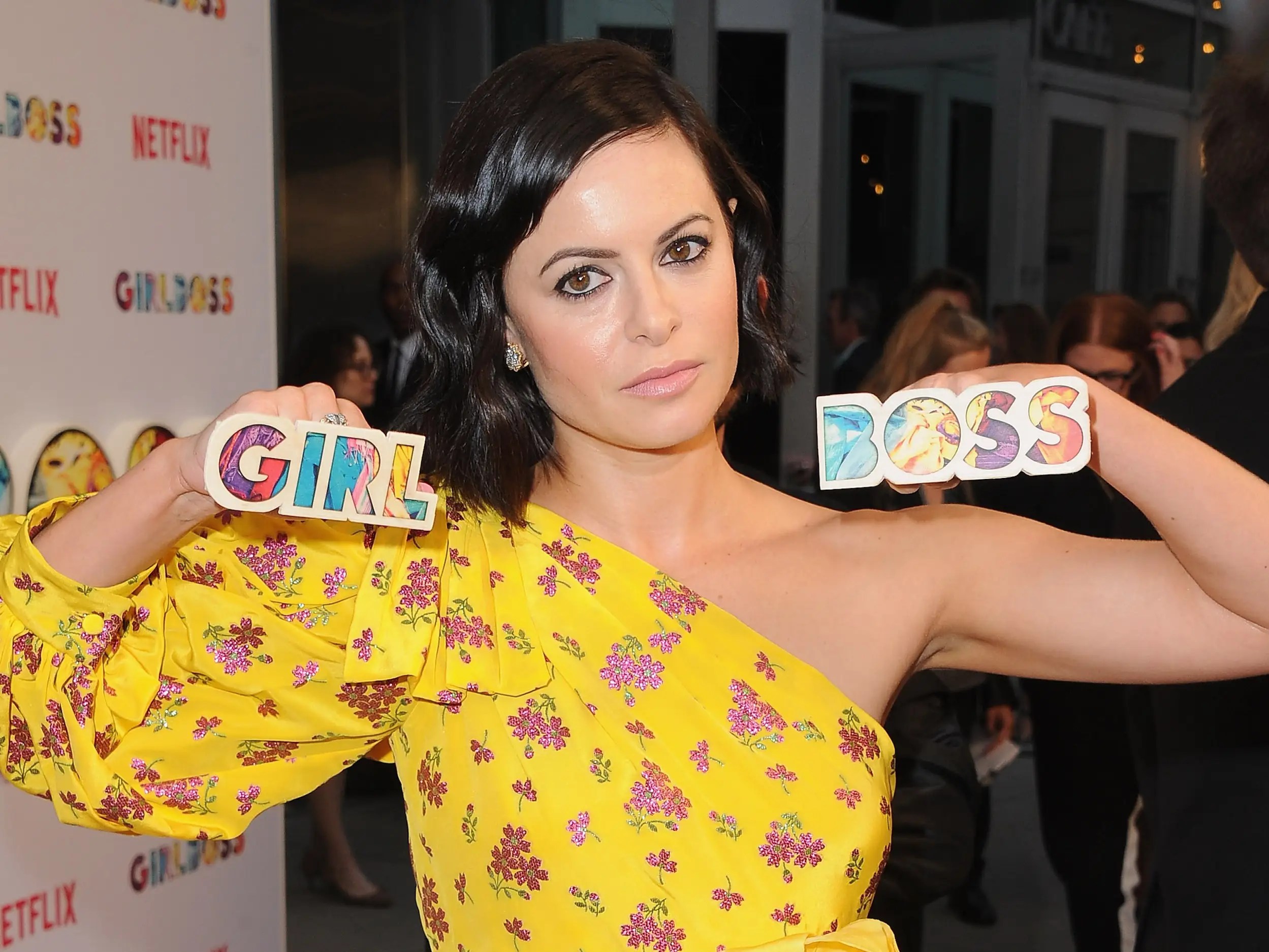
February 2017, Boohoo Group purchased Nasty Gal for $20 million, with Nasty Gal remaining in Los Angeles and continuing to produce apparel, shoes, and accessories under its own brand.Girlboss star Britt Robertson and Nasty Gal founder Sophia Amoruso at an event for their Netflix drama Credit : MARK RALSTON/AFP/Getty Images

Underdog narratives typically build to that big, final victory, where our beaten-down hero somehow overcomes the odds stacked against them, achieving the dream they never thought could ever be achievable. We cut to black, the credits roll, and we’re left feeling good inside. But what happens when that inspiring tale suddenly gets a dodgy epilogue?
Sophia Amoruso, L.a.'s Millennial 'girlboss,' Is Busy With Her Second Act
The major question hanging over the new Netflix drama Girlboss is how much it’ll lift from the inspiring rags-to-riches true-life story that forms its premise. Girlboss is based on the life of the Nasty Gal entrepreneur Sophia Amoruso, who turned an everyday eBay shop into a thriving lifestyle industry with nearly $300 million in sales.
If Sophia’s story was fictional, that’s probably where it’d end. But Amoruso’s internet-shaking clothing enterprise rapidly fell apart, its feminist credentials undermined by a series of lawsuits, and its increasing overhead resulting in the humiliation of a recent bankruptcy filing.
Luckily for Amoruso, Girlboss was in production long before Nasty Gal filed for Chapter 11 last November, but it has cast an uncomfortable shadow over the new series, replacing what would have been an inspiring true-life saga into a giant pink elephant.
Sophia Amoruso Shares What She Learned From Nasty Gal & Girlboss + Why She Started The Business Class
It’s no surprise that Netflix was at one point drawn to Amoruso’s journey. A self-made millionaire with millennial swagger and a severe fringe, Amoruso was the sort of 21st century feminist success story that think piece writers could only dream of; a savvy, sweary, hashtag-friendly wunderkind who uses words like “curate” and “chill”, with a snarky, hipstery appeal that quickly turned her into the avocado-on-toast of e-commerce.
As Amoruso tells it, she went from dumpsters to high fashion with remarkable speed. The daughter of solidly middle class parents in mid-Nineties Sacramento, Amoruso learned to fend for herself when both of them lost their jobs, instilling in her a before-her-years work ethic that saw her set up her own lemonade business at age 9, read books about start-ups before she was in braces, and work ten different jobs by the time she was 22.
Having dropped out of community college, she was living with her step-aunt and struggling to get by as an anti-capitalist crusader. Her boyfriend lived in a treehouse, while she shoplifted and dumpster-dived for food. So she began selling clothes on eBay, something that turned out to be a particularly successful venture. She would raid charity shops for items of clothing, which she would then sell at an upscaled price. One Chanel jacket that she purchased for $8 at a Goodwill store ended up being sold for $1, 000.
Sophia Amoruso #girlboss Book Review || The Travel Tester
She would rope in friends to model vintage clothing for the tiny thumbnails on eBay, pictures that were well-lit and vaguely aspirational in comparison to the less fanciful photographs employed by other sellers, while she would regularly trawl the site for misspelled listings, assuming that someone selling an “Eve Saint Laurent” jacket would know little about the actual value of said items.
Named after an old Betty Davis track, Nasty Gal was soon cultivating its own brand identity: vintage clothes for cool, unique young women. Amoruso spread the word on MySpace and subsequently Facebook, targeting consumers who had previously ‘liked’ brand-appropriate fashion outlets like Nylon Magazine. Booted off eBay for promoting her own websites, Amoruso quickly moved her online store elsewhere, taking on employees and moving into an office in Los Angeles.
Partnerships were struck with fashion and footwear brands, and the success of the brand caught the eye of venture capitalists who wished to invest. Over $49 million of equity came Nasty Gal’s way, and Amoruso’s reported $280 million net worth saw her land on Forbes Magazine’s list of America’s Richest Self-Made Women.
Girl Boss Ask Me About My Business
Meanwhile, Amoruso was regularly cited as one of the key “influencers” in the Ban Bossy movement, which encouraged young women to annihilate the regressive definitions of the word, ones that tend to demean women who are assertive or ambitious. Amoruso was now talked about as if she were a girl-power hero and a role model for a generation of budding female entrepreneurs. “Amoruso is making feminism cool again, ” claimed a hysterical Business Insider profile in 2014.
But the truth seemed a bit less empowering. 2015 saw the first of several lawsuits filed against Nasty Gal by former employees of the company, who claimed they had their employment terminated after becoming pregnant. Another employee claimed they were let go while suffering from advanced kidney failure, and that the company allowed her healthcare coverage to lapse, meaning she was unable to afford medication. Many of the cases have since been settled out of court.

The lawsuits suddenly compelled media outlets to take another glance at Nasty Gal’s practices, however, with a 2015 Jezebel expose speaking off-the-record to several former employees, many of whom described the Nasty Girl workplace environment to be toxic.
With Girlboss, Sophia Amoruso Is Using Past Failures To Fuel Her Latest Success
Much of the blame, employees indicated, sat at the feet of Sheree Waterson, who was appointed CEO of Nasty Gal in 2014 after Amoruso decided to step down, apparently overwhelmed by the new responsibilities of her job in the wake of financier investment.
I didn’t love having eight people reporting to me and asking me over and over if we’re hitting targets, she told Forbes. I’m a creative. I’m a brand-builder. I’m a rainmaker. I’m a pretty good marketer, but that’s not something I want to do every day.
Waterson, according to testimonials sent to Jezebel, was an argumentative, ineffectual leader out of touch with the demands of Nasty Gal’s buyers. “When people presented her with legit selling data on items she deemed irrelevant, she would brush it off and push the merchants to invest in styles that she personally liked, ” one claimed.
The Rise And Fall Of The Girlboss — And Why Her Fall Is A Good Thing
Others claimed that Amoruso became more fixated on being a famous figure than an actual businesswoman, particularly while launching her self-penned memoir, #GIRLBOSS. “If she wasn’t out doing press or interviews, she would be locked in her office; there was no visibility or sense of presence, ” a former employee alleged. “Especially when #GIRLBOSS came out and her ego exploded, she began acting like a celebrity not a CEO.”
While the company began to internally implode, with multiple employees quitting and Waterson struggling to find new senior staff, industry insiders began to gossip about Nasty Gal’s longevity. Sales were down, expenses for brand promotion and expansion were up, and the company was struggling to secure capital or find a wealthy buyer. While breathless articles in Forbes Magazine estimated that the brand would hit $300 million in
:no_upscale()/cdn.vox-cdn.com/uploads/chorus_asset/file/8373079/sophia_amoruso_girlboss.jpg?strip=all)

Posting Komentar untuk "What Business Is Girlboss Based On"